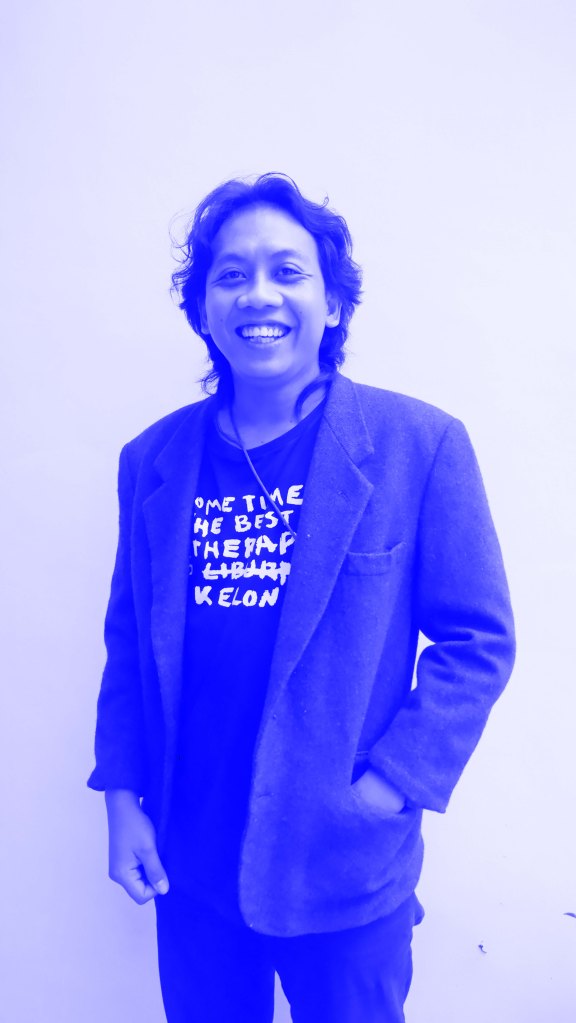
In order to improve the quality of artistic activities in the context of work and process at Surabaya State University, several students with the motive of Candra P.W, Khairus Samhan, Kiyoro Putro, Yanuar Lek, Kharisma Adi PSR 2013 students held a competition called SERVIS.
SERVIS itself is a competition that was previously carried out in 2014 and then continued in 2016, the format of SERVIS is a competition by competing for awards and prizes from the categories contested, the categories contested include; Coolest students, sketches, comics, photography, conceptual art, mini stories, and poetry. Although the organizers are students of Srdg (fine arts and graphic design), the scale of the competition is expanded in the Surabaya State University scope, so that all Unesa residents who are registered as students can follow.
In the first paragraph there is a sentence “in order to improve the quality of artistic activities at Surabaya State University” then why is it necessary to improve the quality of art in the scope of the campus? Or maybe the pattern of art at Surabaya State University is not quality, of course not so, there must be a barometer to be able to call the current quality good or bad. Let’s say we are currently talking about the quality of the work of Surabaya State University students, this is important because Surabaya State University has a Faculty of Language and Arts and there are many study programs related to art or literature, for example; Fine Arts Education, Fine Arts, Music, Dance, Theater, Graphic Design, Indonesian Literature, Indonesian Language Education, English Literature, and several other study programs related to language and art.
We will feel a little how the “quality” of students in the benchmark of art through SERVIS, it is very interesting to know how far the formation of students at Surabaya State University who later after graduating will become art distributors whether it is to become practical actors, or become teachers who of course have an even harder task because they have to distribute art knowledge properly and correctly + actual, after all it is impossible for a teacher to be able to explain about art properly and correctly if he only gets the material from the book, there must always be actualization as a form of art distributor competence.
In this paper I will report to the reader what my findings were when organizing the SERVIS event. There needs to be criticism about what I encountered here, because negativity is a mode of critical engagement in dominant culture1.
First
the lack of understanding of the basic understanding of one of the categories contested, namely sketching, this is not a problem when those who make mistakes are non-art students, because we can realize they do not get material about it, but when the majority of those who make mistakes are art students, of course this is very disturbing in my opinion, and must be discussed at length, and what needs to be known again is that the participants in the competition are students from 2012 to 2015, of course they should have received sketching material.
What is wrong with some of the participants who took part in the competition in the sketch category is that they did not make sketches for the sketch category they made illustrations, and fatally it was understood as a sketch by the participants in the sketch category. The definition of a sketch is to move an object with strokes, shading or color with the aim of being either a design or a work that can stand alone (finished, usually sketches are only made “lightly” using easy materials such as pencils, ink or pen2. Sketches that are intended as an initial stage in the making of a work or a finished work in its final form will still look “light”, not using techniques with a certain complexity because later the work is not understood as a sketch anymore but tends to be an illustration work. The choice of drawing techniques used by many participants does not refer to sketching at all because looking at the content of the drawings made it does not fulfill the element that it is a sketch, instead making the work into an illustration work.
How can such a basic understanding be missed? Let’s just say that those who don’t understand are “bad” students who never listen when given material in lectures, but almost all participants in the sketch category end up making illustration works, then are they all “bad” students, I certainly don’t think so. Let’s take this further by discussing the learning process in the classroom when the material fails to be accepted by students then there are several indicators that should be questioned.
1.) What is the bad atitude of the students, in the sense of being “naughty” students who do not want to listen to the material provided by the teacher.
2.) Are the resources bad, so it is very difficult to be able to absorb the course well.
3.) The delivery of material that stutters from the teachers so that the material is very difficult to understand.
That’s three pints that are indicators, the variables I take are only from the side of students and teachers, actually if it is expanded again there will be other factors such as whether the classroom conditions for teaching and learning are comfortable enough, and many more things.
In this paper I will not conclude anything, I will just write about the things that I captured through the implementation of SERVIS. The first indicator that mentions the poor atitude of students by not wanting to listen to the material, it is possible that this happens but certainly does not occur on a majority scale, when only 30% of the participants were unable to sketch instead of making illustrations I would still be able to conclude like that “oh maybe they are wrong, when in class they don’t want to listen” but at this time who experienced mistakes almost 95% of the SERVIS participants in the sketch category, it is irrelevant if the problem is only from this side.
Furthermore, poor resources, meaning that students are indeed unable to absorb the material being taught. But immediately this statement will fall considering how tight the tests are to enter state universities, there are several forms and patterns of tests carried out to filter out qualified students. Maybe it would be different if the problem was the screening process so that those who passed were people who were not competent, but we don’t need to talk about this because it will go too far.
The last one is the delivery of material that is stuttered by the teacher, this makes sense considering the percentage of participants who make mistakes. If this happens of course it will be very fatal, because basic understanding is the foundation for carrying out the art process to the next stage, I am not trying to corner the teacher or anyone here, but if what I say is true is the root of the problem, of course it must be fixed immediately. I am also an alumnus of Fine Arts Education at Surabaya State University, I will try to tell you a little about the process I experienced, in the sketching course we were all explained and then given the task of doing a large number of sketches, but indeed when giving material about what sketching is I think it is given incompletely, In the sense that it does not become an emphasis that must be understood first but is rushed to practice, not all are interested in understanding further, it is indeed more fun to practice immediately, but that in itself will reduce the essence of the practice carried out when the understanding of what we are doing cannot be understood properly.
Second
The form of appreciation is very lacking, the form of appreciation from students and from teachers is also very lacking. Knowing the conditions at Surabaya State University that lack of events to support the pattern of art there, some of the students agreed to make an event to enliven the art ecosystem on campus, but did not get a good response from Unesa students themselves. Perhaps one of the factors is that the committee was in a hurry to make an event without doing enough publicity so that the interested appreciators were few, but I will slightly defend SERVIS that at least in the fine arts and graphic design classes there are already agents who are tasked with distributing information to their classmates, but in the end there were still not too many participants like what the committee aspired to. In addition to this, it may also be due to the art climate in Unesa that is formed too high even though it does not target high at all, high what I mean is that the artists at Surabaya State University only know the mainstrem patterns of art such as conducting exhibitions in galleries, performing performances in performance halls and so on, there are only a few who are able to get out of the confinement of such a mindset. When what is known is only such art patterns, of course the form of appreciation for activities outside of it is very lacking, even though it needs to be known that today’s art forms are very developed and do not always follow this pattern, the movement pattern must be emphasized that the developing movement pattern is something wild, naughty, or if it is directed seriously it must be done as seriously as possible.
Third
The next shortcoming is student institutions or commonly referred to as HIMA (student associations), we know that these institutions are made to accommodate student activities, provide support or the like. This institution is well aspired even though it is not run well, this SERVIS program has been proposed to be implemented from the beginning of this year (2016) but there are only promises to realize it, well why is the work pattern of campus-scale institutions like this, only giving promises, of course this is the wrong thing that must be addressed. There should be a firmness because the idea to do this event is not from within the institution but from students who are not members of Hima, Hima itself should have an attitude to be able to help or not in the implementation of this event, because if only promises, the time schedule that has been set against this SERVIS event will fall apart and it has happened.
I appreciate that in the end Hima provided assistance for the continuity of the event, and hopefully this form of cooperation can continue to be built. Suggestions for Hima administrators and supervisors, the events held by Hima should not be required to be big events or events with a rigid format (gallery exhibitions), there should be many small-scale events held once a month so that the art ecosystem is even better, if in the end there is a big event that must be held, the participants are those who have been forged through many small events held, of course the quality will be much better and better.
Written as a curatorial introduction to the exhibition entitled Service vol.2
- Servis is a art competition all state university og surabaya college student, as appreciation of the process of studying at UNESA, the service will provide an award and recognition of the extent to which your work and strive to achieve more value than others.
- In 17-27 May 2016
- Process at T3 Building, State University of Surabaya, and exhibition at /SANDIOLO, Jl. Gempol Balas Klumprik no.1, Wiyung, Surabaya 60222
 Dwiki portfolio
Leave a comment